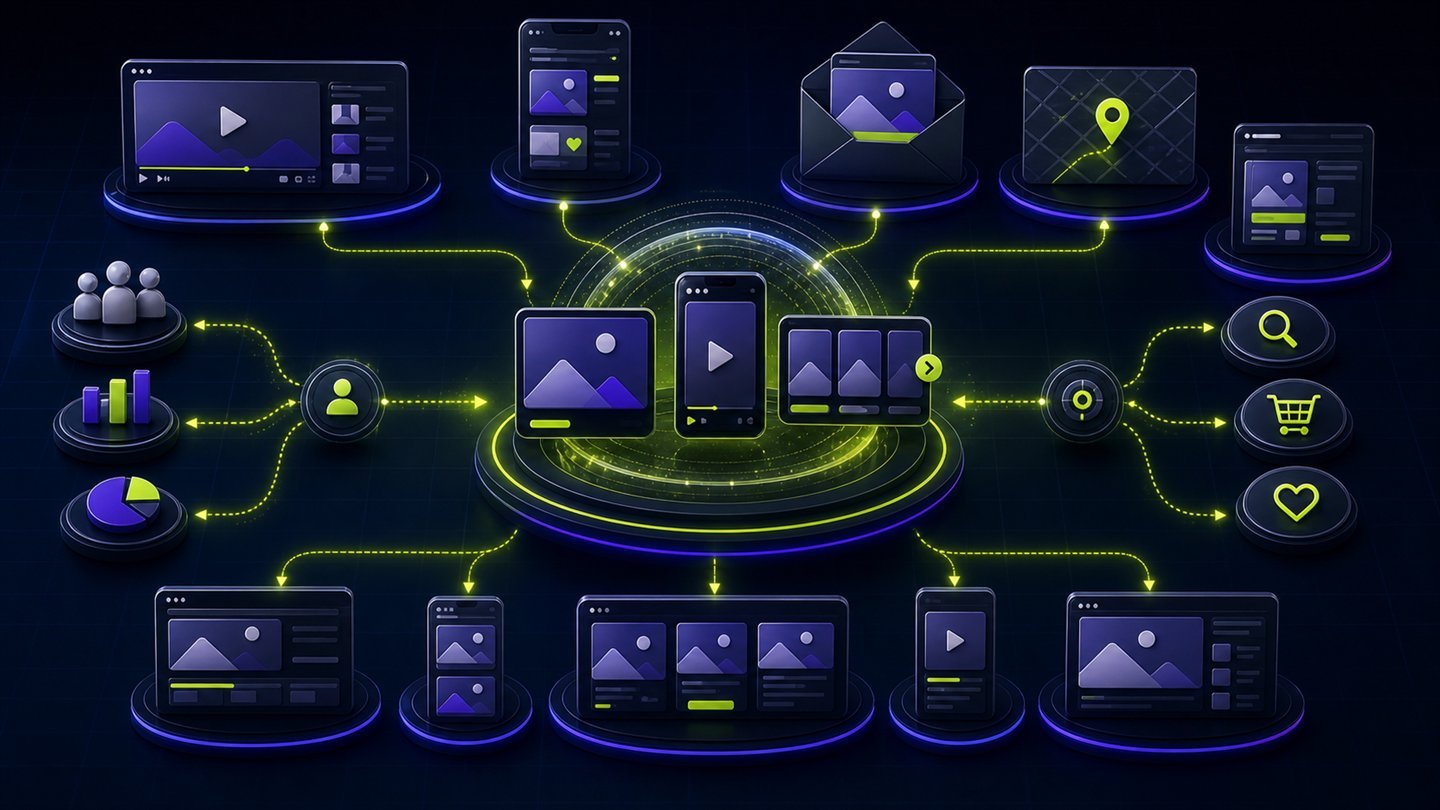
Demand Gen is Google’s visual, audience-led campaign type for generating engagement and action. Eligible ads can appear across YouTube, Discover, Gmail, Maps and the Google Display Network. You supply the creative, audiences, conversion goals, budget and bidding direction; Google adapts eligible combinations to each surface. It is best understood as a performance-focused visual campaign system, not simply paid social copied into Google Ads.
Demand Gen can use image, video and carousel ads; retailers may add a Merchant Center product feed. Bidding options cover click volume, conversion volume and conversion value, including target-based strategies when a stable CPA, CPC or ROAS matters. The campaign should therefore start with a clear business outcome and suitable measurement — not with a channel checklist alone.
Use assets built for their destination: horizontal, square and vertical imagery plus videos suited to in-stream, feed and Shorts contexts
Lookalike segments use an eligible first-party seed; narrow, balanced and broad settings trade similarity for reach
Optimized targeting may serve beyond selected audience signals; switch it off when the audience must remain constrained

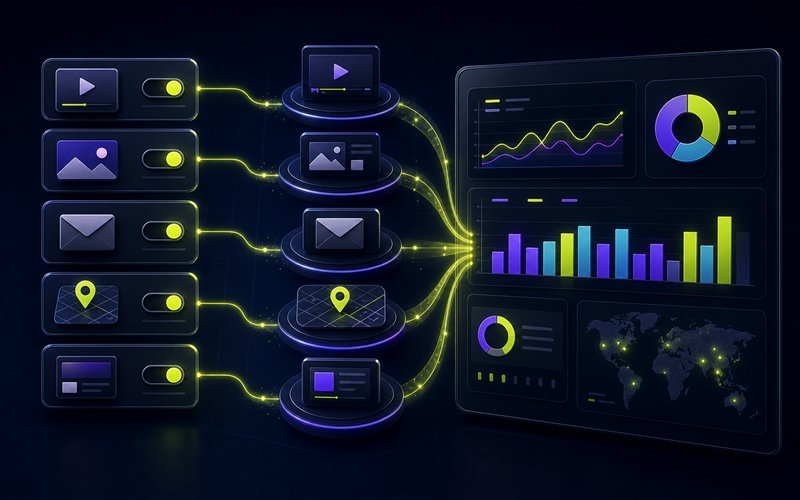
A strong campaign is not one landscape asset stretched everywhere. Give the system materially different hooks, images and videos, and cover the aspect ratios that match your chosen inventory. Creative preferences can anchor particular videos to in-stream, in-feed or Shorts formats. Product feeds can turn visual ads into a browsable storefront, but clean Merchant Center data and strong editorial assets still matter.
Audience segments can include interests, custom segments, your data and Lookalikes. Optimized targeting is a separate expansion mechanism: selected segments can become signals rather than hard limits. Review the “expansion and optimized targeting” traffic, channel segmentation and YouTube format breakdowns. Brand-suitability controls also differ by surface; core content-suitability exclusions are generally managed at account level, so verify them before scaling.
Accuracy check: reviewed against current Google Ads Help documentation on 3 August 2026.
Demand Gen replaced Discovery campaigns and adds broader visual inventory, video formats, channel controls, Lookalike segments, expanded bidding options and more detailed reporting. In 2026, Google is also moving Google Display campaigns into Demand Gen as Google Display Network inventory.
Eligible ads can serve on YouTube, including in-stream, in-feed and Shorts, as well as Discover, Gmail, Maps and the Google Display Network. Availability depends on your selected channels, ad format, audience and account eligibility.
Yes. Channel controls are set at ad-group level. Use all eligible Google channels automatically or manually select channels and, within YouTube, formats such as in-stream, in-feed and Shorts.
Demand Gen supports image, video and carousel ads, and retailers can connect a Merchant Center product feed. Depending on the objective and account, bidding can optimize for clicks, conversions or conversion value with maximum-volume or target-based strategies.
No. Lookalike segments are built from an eligible first-party seed and offer similarity or reach settings. Optimized targeting can use selected segments as signals and may serve beyond them; it can be turned off when strict boundaries are required.
Everything you need to understand PPC is here. If you'd rather spend your time running your business than managing campaigns, we can do it for you.
Ask us to run it